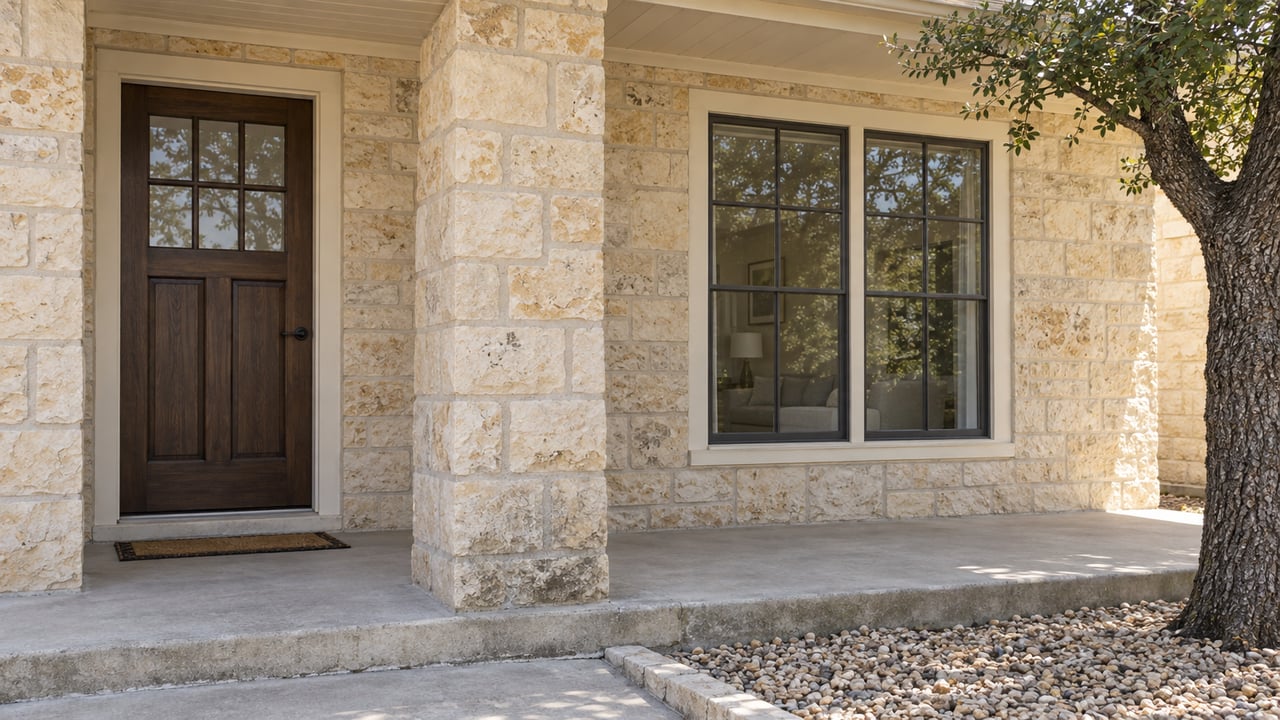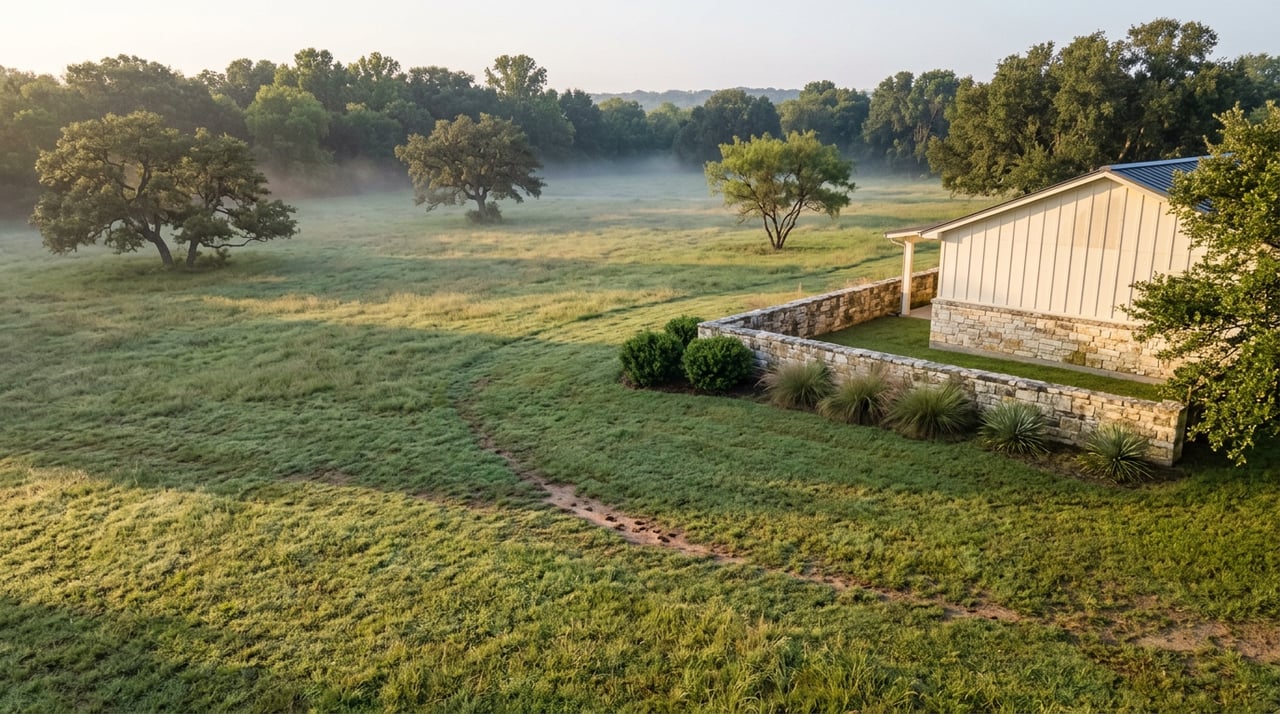
A 5.66-acre homesite inside The Preserve at Walnut Springs listed for $495,000. Nearby lots of similar size in that same community carry wildlife-exempt property tax bills close to $1,075 a year, a fraction of what a market-value assessment would produce on Hill Country acreage priced that high. That gap between price and tax bill is the entire reason "ag exempt" and "wildlife exempt" show up in so many Blanco County listings.
It's also where new landowners get surprised. The low number on the tax bill isn't a feature of the land the way a well or a view is. It's a description of what someone is currently doing with the land, filed year by year with the county. Buy the property and that description doesn't ride along in the deed. Change what the land is used for, even by accident, and, as the Texas Comptroller explains, the county doesn't just raise next year's bill. It reaches back and charges you for years you already benefited from, plus interest.
The Exemption Is a Filing, Not a Feature
Under Article VIII, Section 1-d-1 of the Texas Constitution, qualifying land gets appraised on what it can produce rather than what it would sell for. That's the mechanism that lets a pasture along a growing corridor get taxed as if it produces a modest amount of hay a year, instead of being taxed on what a builder would pay for the same acreage.
What trips up new owners in Blanco County is that the valuation belongs to the use, not the deed. Even if a seller has held the exemption for a decade, a buyer has to file a fresh application with the Blanco County Appraisal District, generally by April 30 of the year following the purchase. Skip that filing and the county has no obligation to keep taxing the land at the old rate, regardless of what the listing promised.
The Penalty Math a Lot of Guides Still Get Wrong
When qualifying use ends, whether a homebuilder clears pasture for a slab, a grazing lease lapses, or fencing comes down and nothing replaces it, the county recalculates what the property would have owed at market value and bills the difference for prior years, with interest.
Here's where a surprising amount of information floating around this year is stale:
| Before 2019 | Current law | |
|---|---|---|
| Lookback period | 5 years | 3 years |
| Annual interest | 7% | 5% |
House Bill 1743 cut both numbers, and the Texas Comptroller's own guidance confirms the shorter three-year, five-percent version is what applies today. Several buyer resources published this year still describe the old five-year, seven-percent formula as if it were current. One commonly cited example walks through a 20-acre property worth $300,000 on the open market, paying roughly $75 a year under agricultural valuation versus $6,750 a year at market value, and arrives at a rollback bill near $40,000 using the old five-year math. Run that same gap through today's three-year, five-percent rule and the bill comes out substantially smaller, since it covers three years of tax difference instead of five, at a lower rate of interest on top. The mechanism is the same. The size of the check is not.
Along the Highway 290 corridor between Johnson City and Dripping Springs, where unrestricted acreage sits close to some of the fastest-appreciating addresses in the Hill Country, the gap between agricultural value and market value on a single tract can still run well into six figures even under the corrected formula. Growth pressure is exactly what makes the ag exemption valuable there, and exactly what makes losing it expensive.
The Acreage Line Nobody Mentions
Blanco County's own appraisal guidelines set the qualifying range at 5 to 20 acres devoted to agricultural use, with a detail that catches a lot of buyers off guard: a tract of 10 acres or less is presumed residential unless the owner clears the county's degree-of-intensity standard for whatever activity they're claiming. A picturesque five-acre pasture doesn't qualify itself. Someone has to be running an operation on it that matches what a typical operator would run on that same acreage, and the appraiser can request lease agreements, receipts, or photographs as proof. Blanco County also expects fencing substantial enough to contain livestock to already be in place before an owner applies, and its guidance notes that typical grazing lease rates in the county run somewhere between $6 and $10 an acre, a benchmark the district uses to judge whether an arrangement looks real.
Wildlife management, the other common path to the lower valuation, comes with its own acreage math. The land generally has to have already carried an agricultural appraisal the year before switching to a wildlife plan, and if the tract was subdivided within the past year, a buyer needs at least 20 acres to qualify on their own, or 12.5 acres if the land is part of a cooperative or manages habitat for an endangered species. A five-acre homesite carved out of a larger ranch, standing alone, may not clear that bar without joining a shared plan.
The acreage requirements matter most for anyone eyeing raw, unrestricted acreage along Highway 290 or a lot in Legacy Hills, the gated acreage community west of Dripping Springs where more than half the Phase I lots run around five acres.
Who Actually Writes the Check
According to Ballard Property Tax Protest, a sale by itself does not trigger a rollback. The valuation can pass from a rancher to a buyer who keeps the cattle grazing without any tax consequence at all. The trigger is what happens after closing.
Before writing an offer on ag-exempt or wildlife-exempt acreage near Johnson City, it's worth confirming a few specifics directly with the seller or listing agent:
- What activity currently qualifies the exemption, and how long has it been in place
- Whether any fencing, lease agreements, or wildlife plan documentation will convey
- What the seller expects to happen to the valuation once the property changes hands
According to the Blanco County Appraisal District, an owner must report a use change in writing before May 1 of the following year. Missing that window brings a penalty of 10 percent of the tax difference, on top of the rollback itself.
Where the Community Absorbs the Work
At The Preserve at Walnut Springs, a roughly 2,000-acre community of 66 homesites near Johnson City, the ranch maintains a wildlife management plan across close to 1,500 acres of shared open space. That community-wide plan is part of why individual 5-to-7-acre homesteads there can carry annual property taxes in the low four figures instead of the tens of thousands a market-value assessment would produce.
A shared community plan and a personal ag lease can look identical on a tax bill, which is exactly the kind of distinction worth confirming before, not after, an offer goes in.
Quick Answers
Does selling ag-exempt land trigger a rollback tax? No. As noted above, the sale itself is not the trigger; a change in use is.
Does the ag exemption transfer automatically when I close on the property? No. Even if the exemption has been in place for years, a new owner has to file a fresh application with the Blanco County Appraisal District, generally by April 30 of the year following the purchase.
Is a five-acre lot automatically eligible for an ag exemption in Blanco County? Not by default. The county treats tracts of 10 acres or less as presumptively residential unless the owner documents an active agricultural or wildlife use that meets its intensity standard.
Land near Johnson City rewards buyers who ask these questions before closing, not after the first tax bill arrives. Whether you're looking at a managed community like The Preserve at Walnut Springs or an unrestricted tract along the Highway 290 corridor, the Lisa Little Team can walk through what a specific parcel's exemption history means for your plans. Request a complimentary consultation before you write an offer.
This article is general information, not legal, tax or financial advice. Consult a qualified professional about your situation.